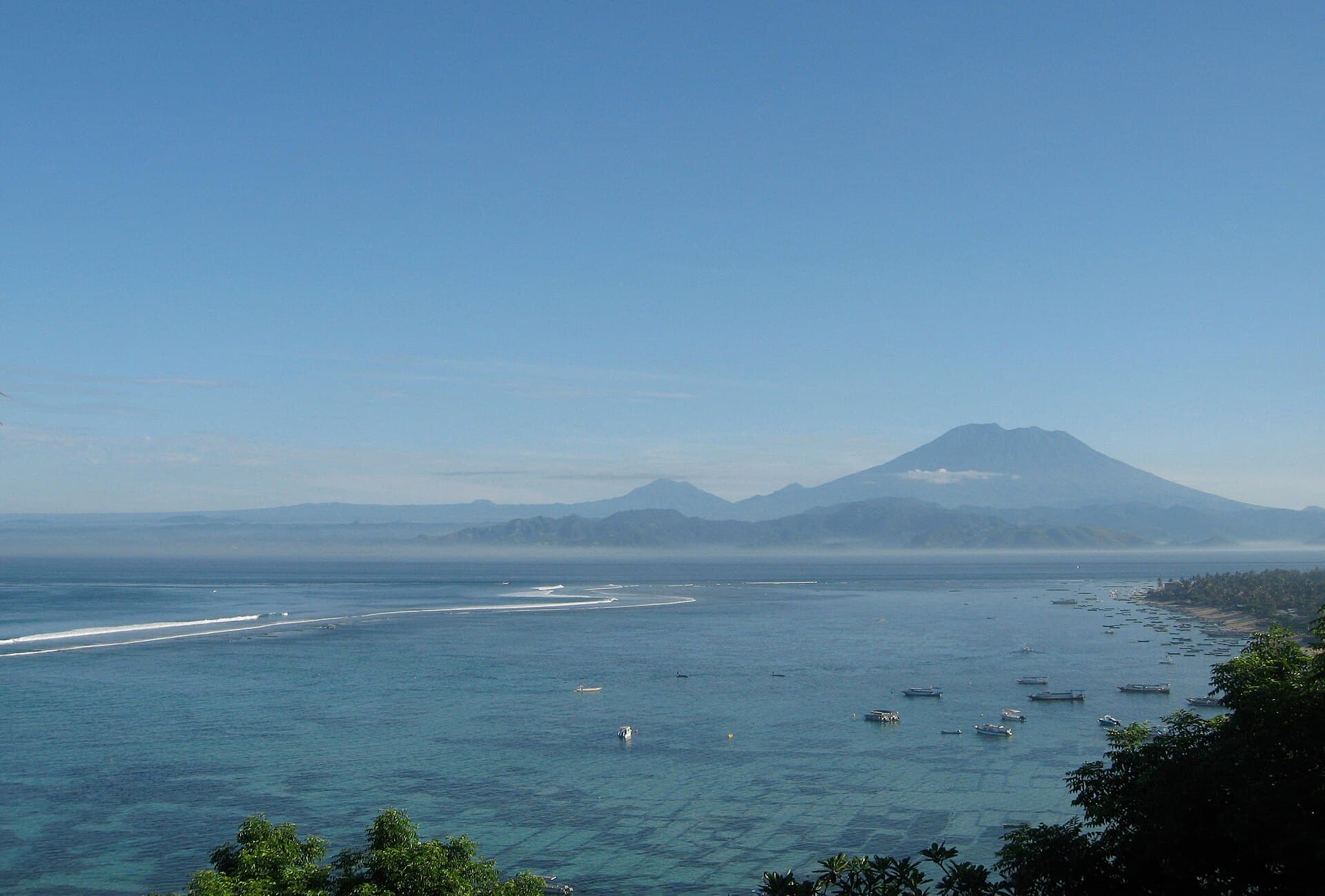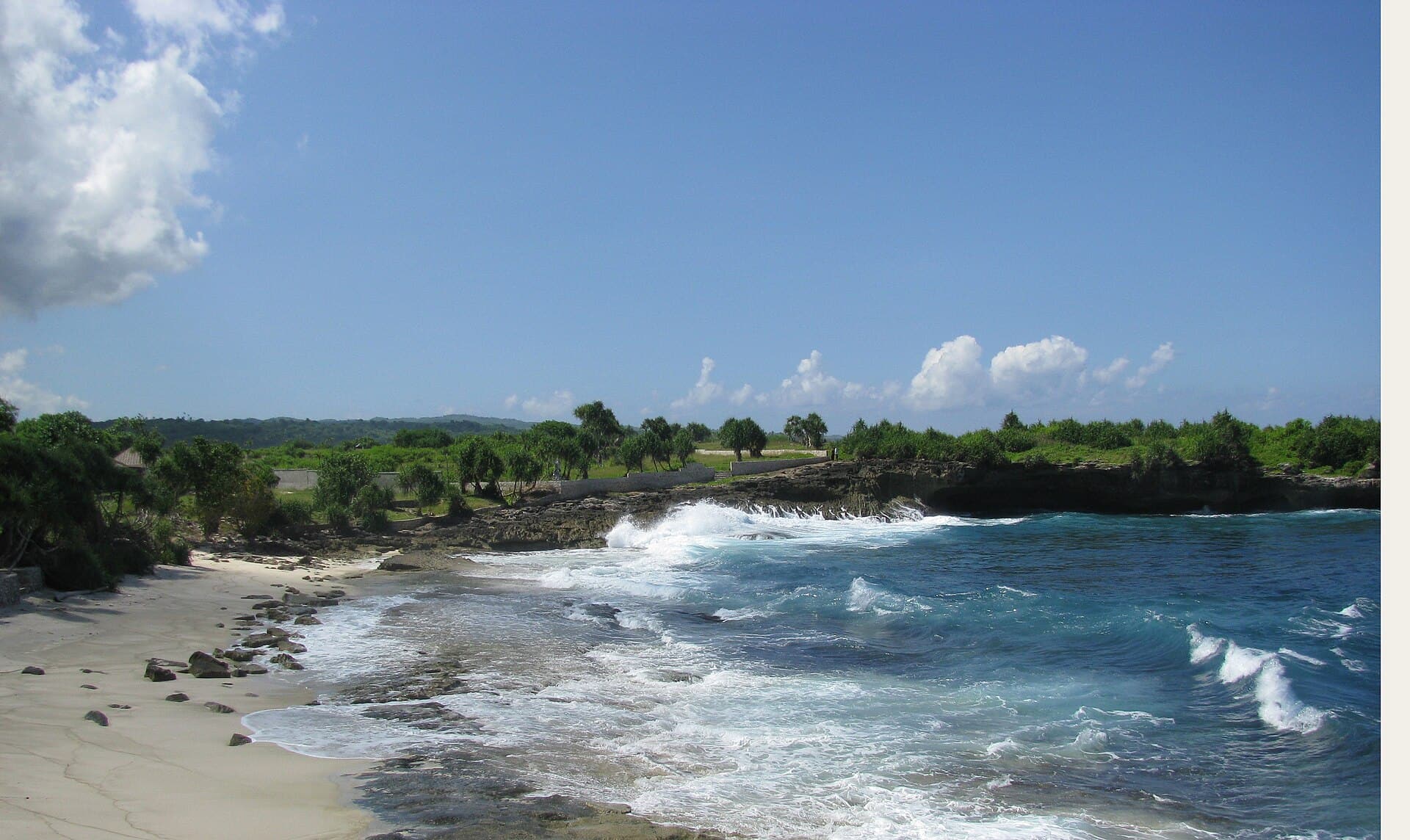
Nusa Lembongan lies eight degrees south of the equator, so it is warm all year — typically 27–32 °C by day. What changes is the rain, the wind and the ocean. The short answer: April to October is the dry season, with sunny days and generally the best underwater visibility; July to October adds the chance of mola mola; November to March is the wet season, green, humid and quieter, with short heavy showers.
Nusa Lembongan month by month
| Month | Weather | Crowds | Verdict |
|---|---|---|---|
| January | Wet season, humid, heavy showers | Moderate (holidays early) | Fine between showers; seas can be rough |
| February | Wet, humid | Low | Quiet and cheaper; variable visibility |
| March | Rains easing; Nyepi (no boats one day) | Low | Good value; check the Nyepi date |
| April | Dry season begins, green | Moderate | Very good — our shoulder-season pick |
| May | Dry, sunny, calm | Moderate | Excellent for snorkelling |
| June | Dry, breezy, pleasant | Rising | Excellent; surf picks up |
| July | Dry, breezy, cooler water | High | Peak season; mola mola begins |
| August | Dry, breezy, cooler water | Very high | Peak season — book ahead |
| September | Dry, sunny | High | Excellent; prime mola mola month |
| October | Dry, warming | Moderate | Excellent — our favourite month |
| November | Wet season begins | Low | Mixed; afternoon storms |
| December | Wet, humid | Very high at Christmas | Busy over the holidays; book early |
April to October — the dry season
The south-east trade winds bring sunny, lower-humidity days and generally calm, clear seas on the sheltered coasts. It is the best time for snorkelling and diving, and the peak surf season on Lembongan’s reef breaks. July and August are the busiest months, with European and Asian summer holidays, and the islands are also busy around Indonesian school holidays.
July to October — mola mola season
From roughly July to October, cold water upwells around Nusa Penida and the oceanic sunfish (mola mola) rise to shallower cleaning stations at sites like Crystal Bay. Water temperatures can drop sharply — sometimes to around 20 °C or lower on dives — so bring or rent a thicker wetsuit. Manta rays remain at Manta Point all year.
November to March — the wet season
The north-west monsoon brings humid heat and tropical downpours, usually in intense bursts in the afternoon or at night rather than all day. The islands turn green, prices soften outside the Christmas–New Year peak, and there are far fewer people. Seas can be rougher and visibility more variable, and boat trips are sometimes cancelled — keep your plans flexible.
Tides, swell and moon phases
- Spring tides (around full and new moon) bring the biggest range: very low tides for seaweed-farm walks, strong currents for divers.
- Swell from the Indian Ocean drives the waves at Devil’s Tear and the surf breaks — and makes the cliffs and exposed beaches dangerous.
- The mangrove boats need a mid-to-high tide.
Nyepi and Balinese festivals
On Nyepi, the Balinese Day of Silence (usually in March), the whole of Bali, including Lembongan, shuts down for 24 hours: no boats, no traffic, no lights and nobody on the beach. Guests must stay in their hotels. The evening before, villages parade giant ogoh-ogoh effigies — a spectacular sight. Festivals such as Galungan fill the temples with offerings and processions; boats and tours usually run as normal.