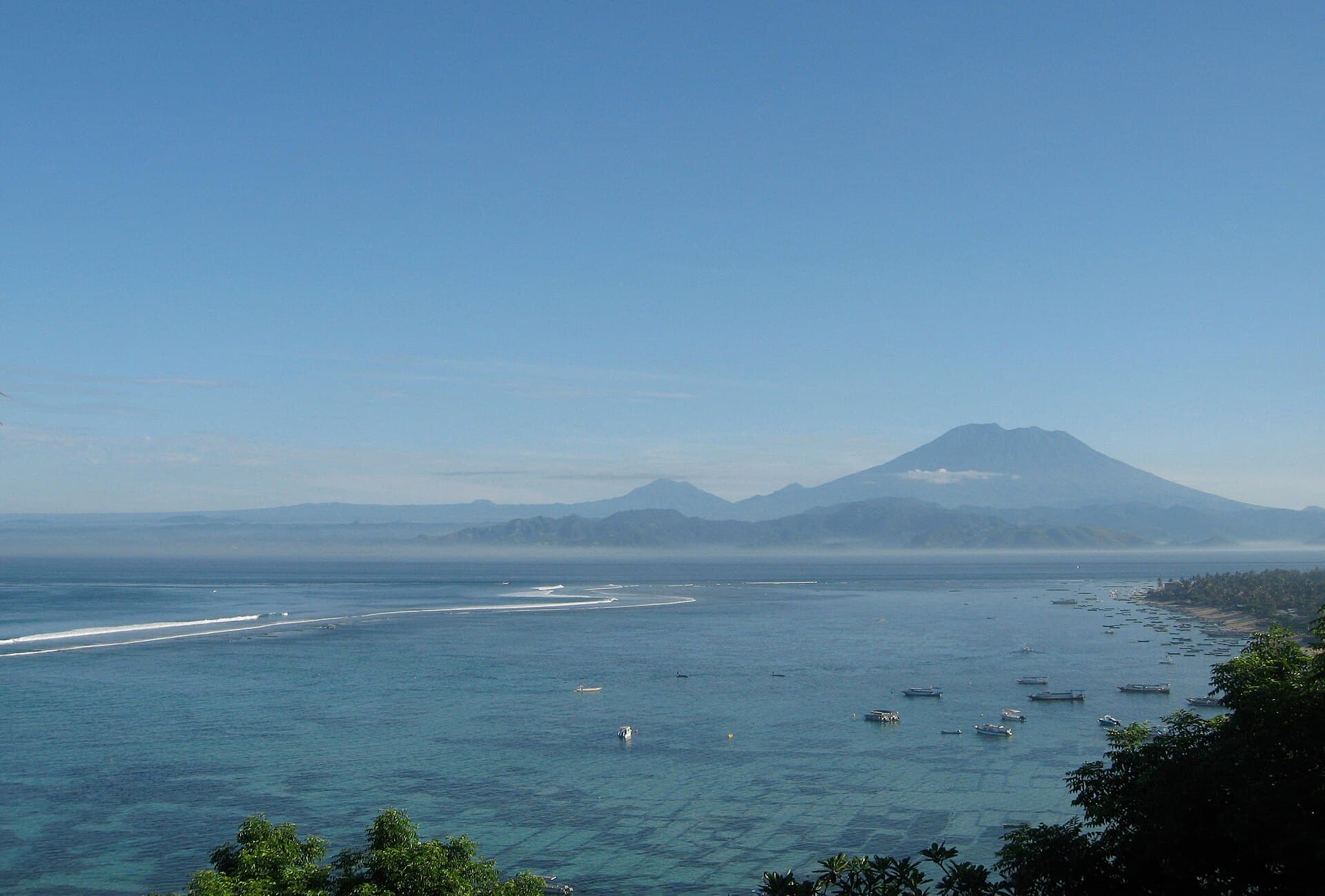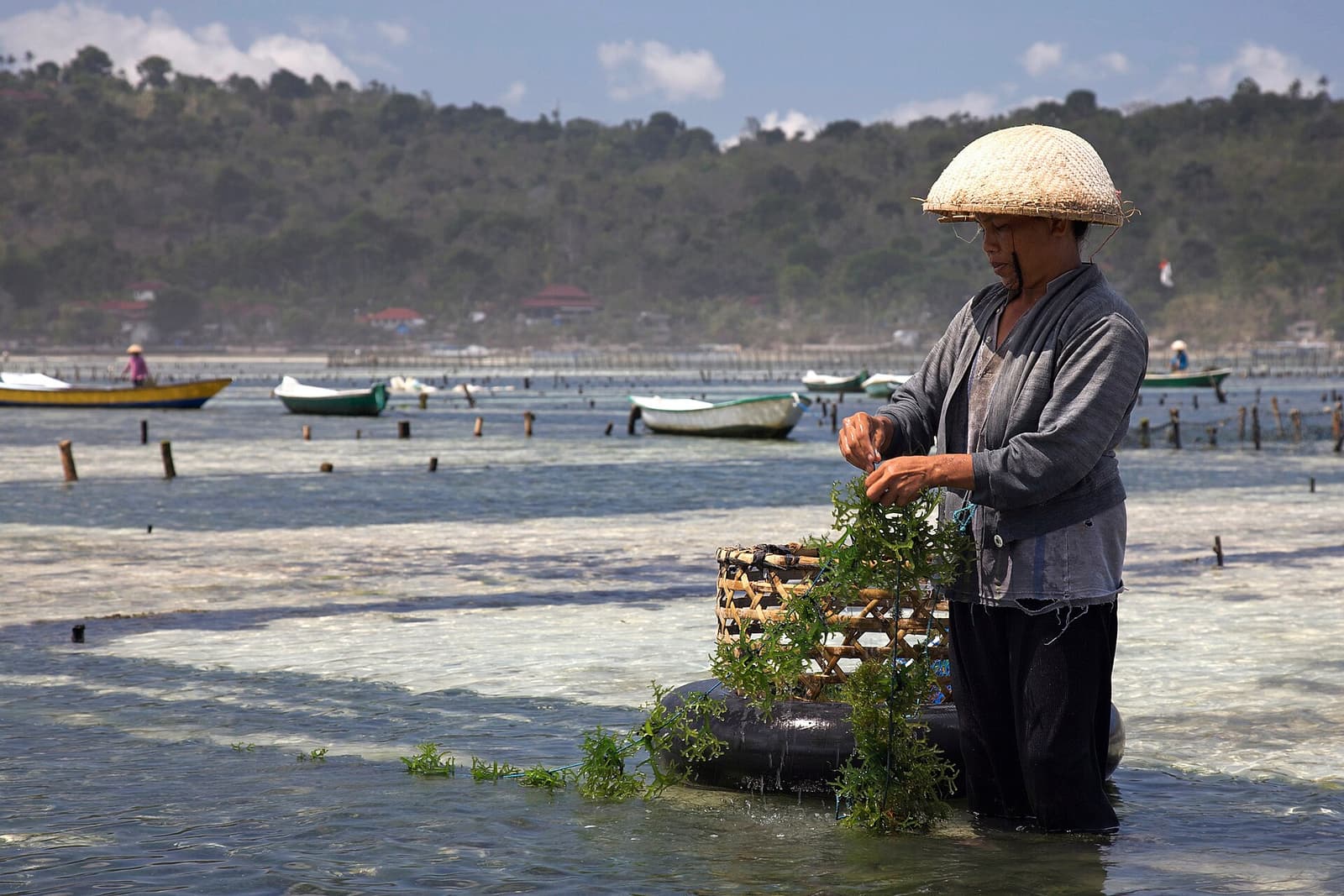
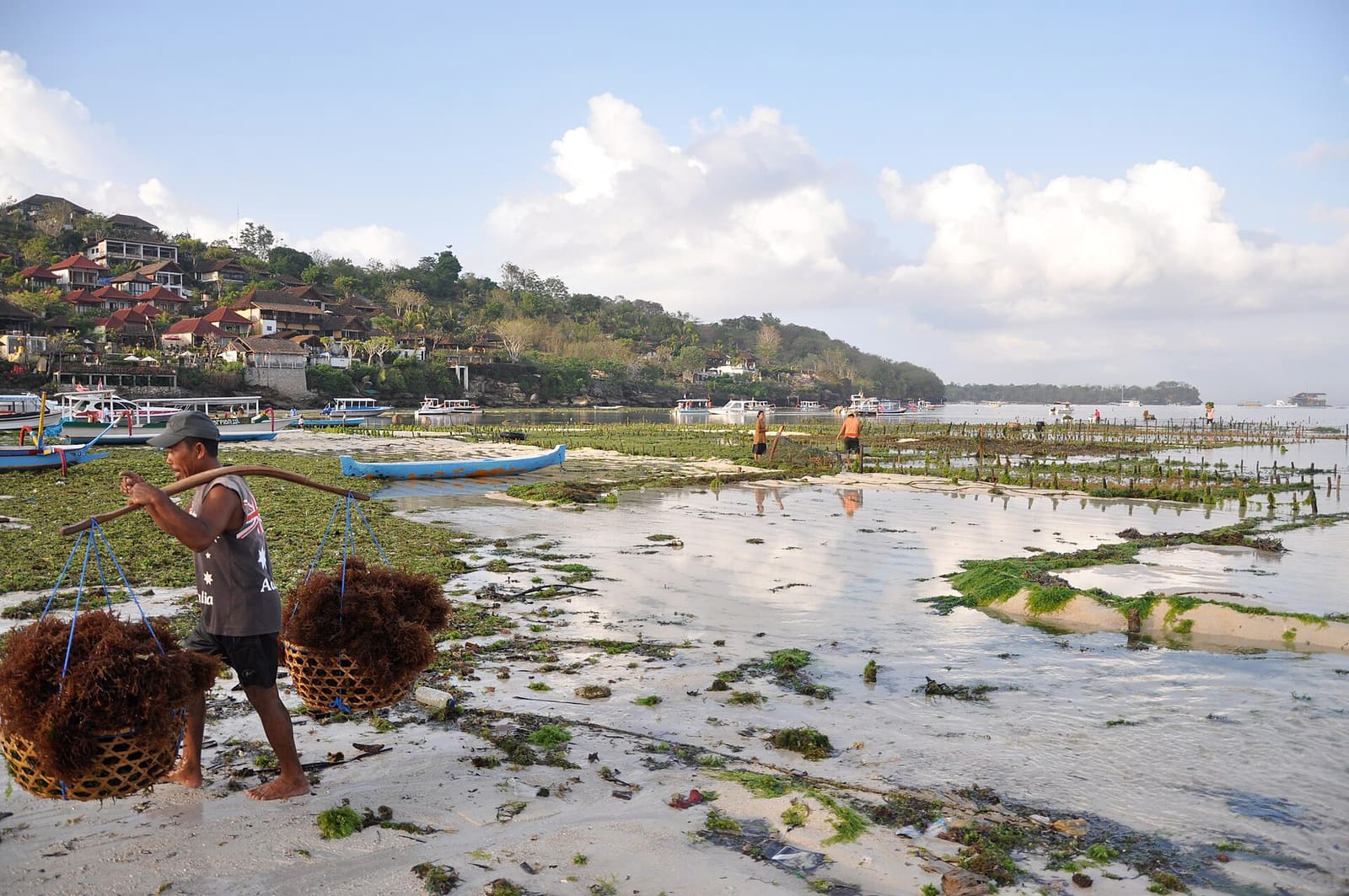
Long before the fast boats and beach clubs, seaweed paid the bills on Lembongan and Ceningan. The shallow, sheltered channel between the two islands was divided into neat plots, where farmers tied cuttings of red and green seaweed to lines between stakes, harvested them at low tide and dried them on tarpaulins in the villages. Most of the crop was exported for carrageenan, used in food and cosmetics.
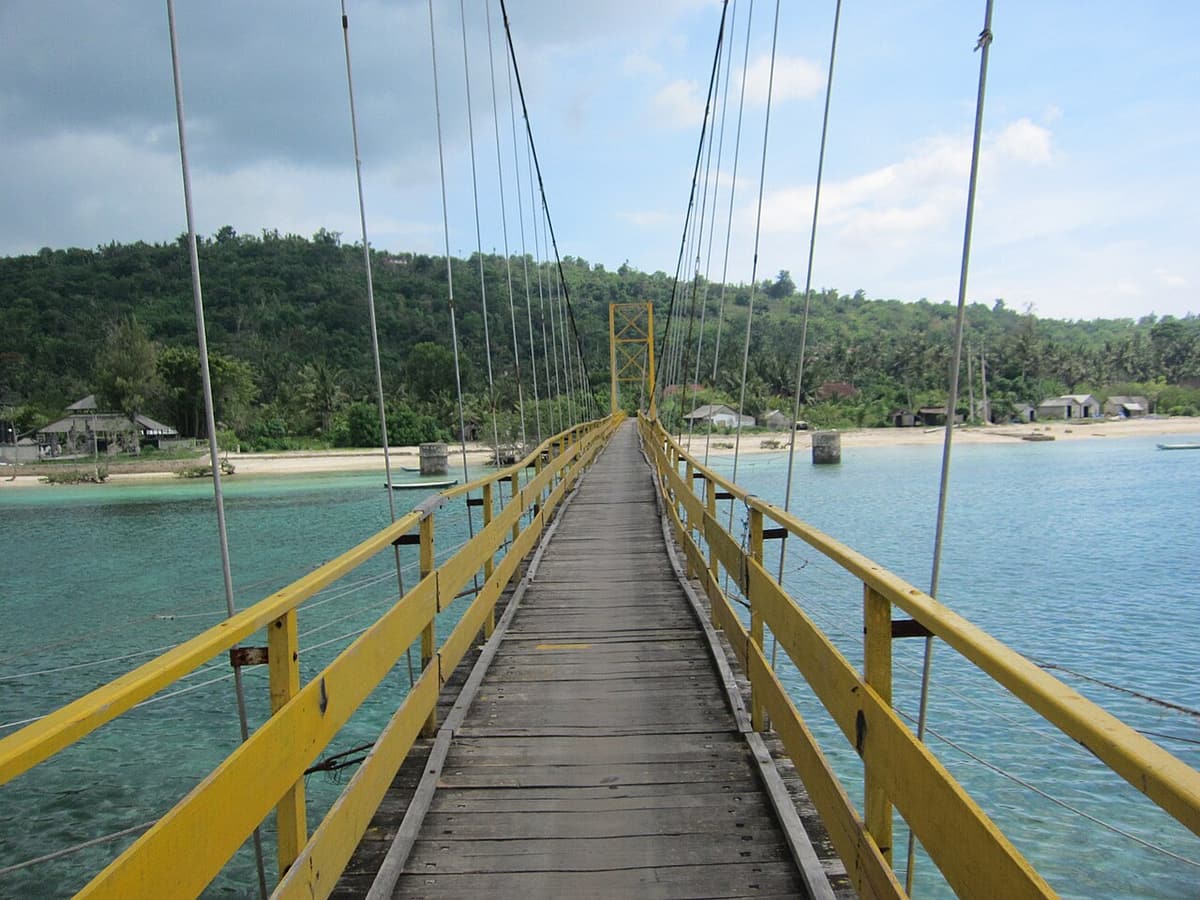
Tourism has taken over much of the island economy, and many plots were abandoned — though when the pandemic stopped the tourists, a good number of families went back to the sea. You will still see farmers at work in the channel, the smell of drying seaweed in Lembongan village, and bright plots under the Yellow Bridge.
Top things to do at Seaweed Farms
Walk the shallows at low tide
The plots are easiest to see — and the farmers busiest — when the tide is out. Be respectful: these are people’s livelihoods, and the lines are easily damaged.
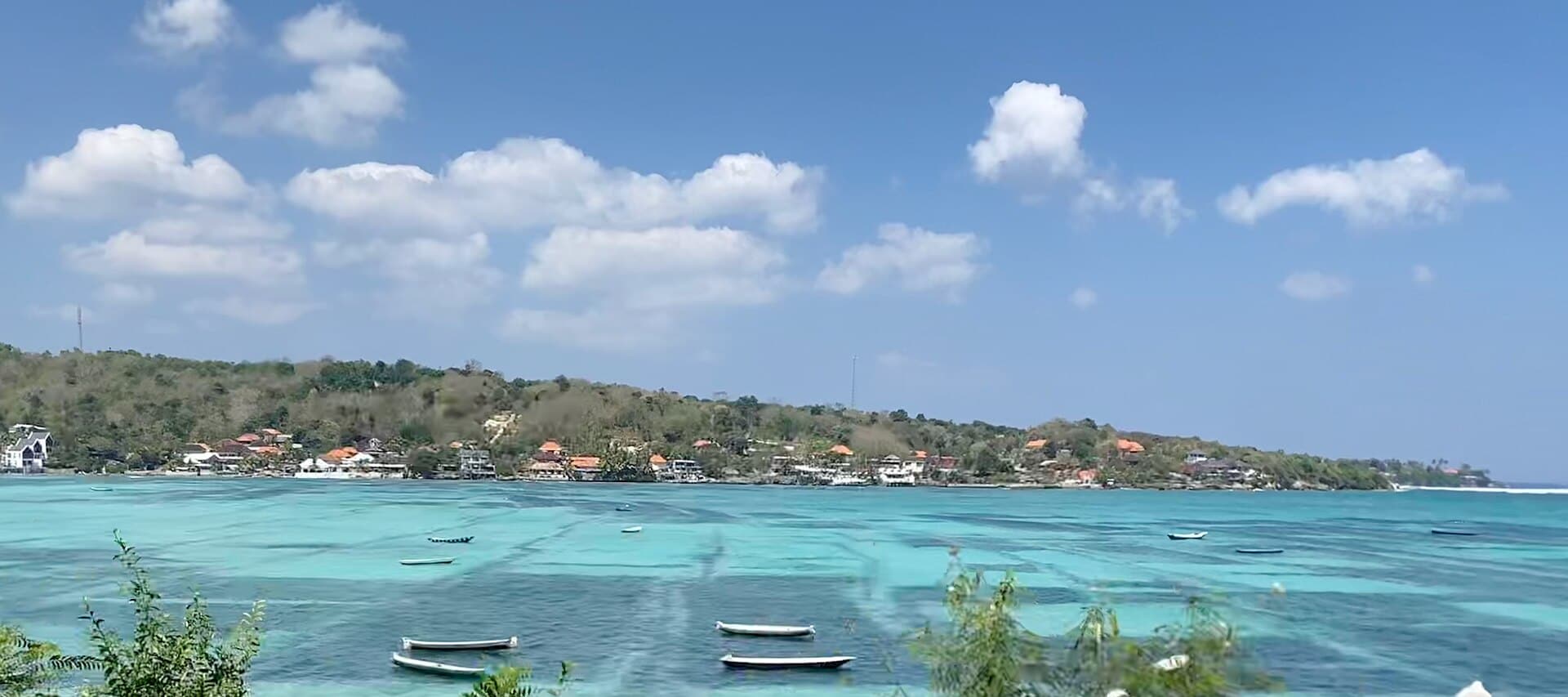
See it from the Yellow Bridge
The bridge gives an overhead view of the patchwork of plots in the channel.
Visit on a cruise
Some day cruises from Bali, like the Lembongan cruise with coral restoration, include a guided stop at a seaweed farm.
How to get to Seaweed Farms
- From Jungutbatu: about 3 km by scooter to the channel near the Yellow Bridge and Lembongan village.
- On Ceningan: the north shore of Ceningan faces the channel and its plots.
- With a guide: island tours often stop briefly at the farms.
Insider tips
- Check a tide table — at high tide the plots are underwater and you see very little.
- Ask before photographing people at close range.
- Wear reef shoes in the shallows; sea urchins are common.
- Buying local seaweed snacks or products supports farming families.
Best tours & tickets for Seaweed Farms
These top-rated experiences are the easiest way to see Seaweed Farms:
 Day cruise from €106
 From Bali: Nusa Lembongan Cruise with Snorkeling & BBQ Lunch
A newer day cruise with a little more substance: besides the pontoon and beach club, you see how Lembongan’s seaweed farmers work and help plant coral fragments. Few reviews so far, but all excellent.
- Snorkelling, pontoon activities and beach club time
- Visit a local seaweed farm
- Hands-on coral restoration and a BBQ lunch
 Island tour from €41 per group
 Nusa Lembongan: Private 4-Seater Open-Air Buggy Tour
Lembongan’s version of a taxi tour. A driver takes you round the island’s viewpoints at your own pace, with time for photos, a swim and a coffee. Rated 4.9 and much easier than a scooter if you have never ridden one.
- Your own open-air buggy and local driver
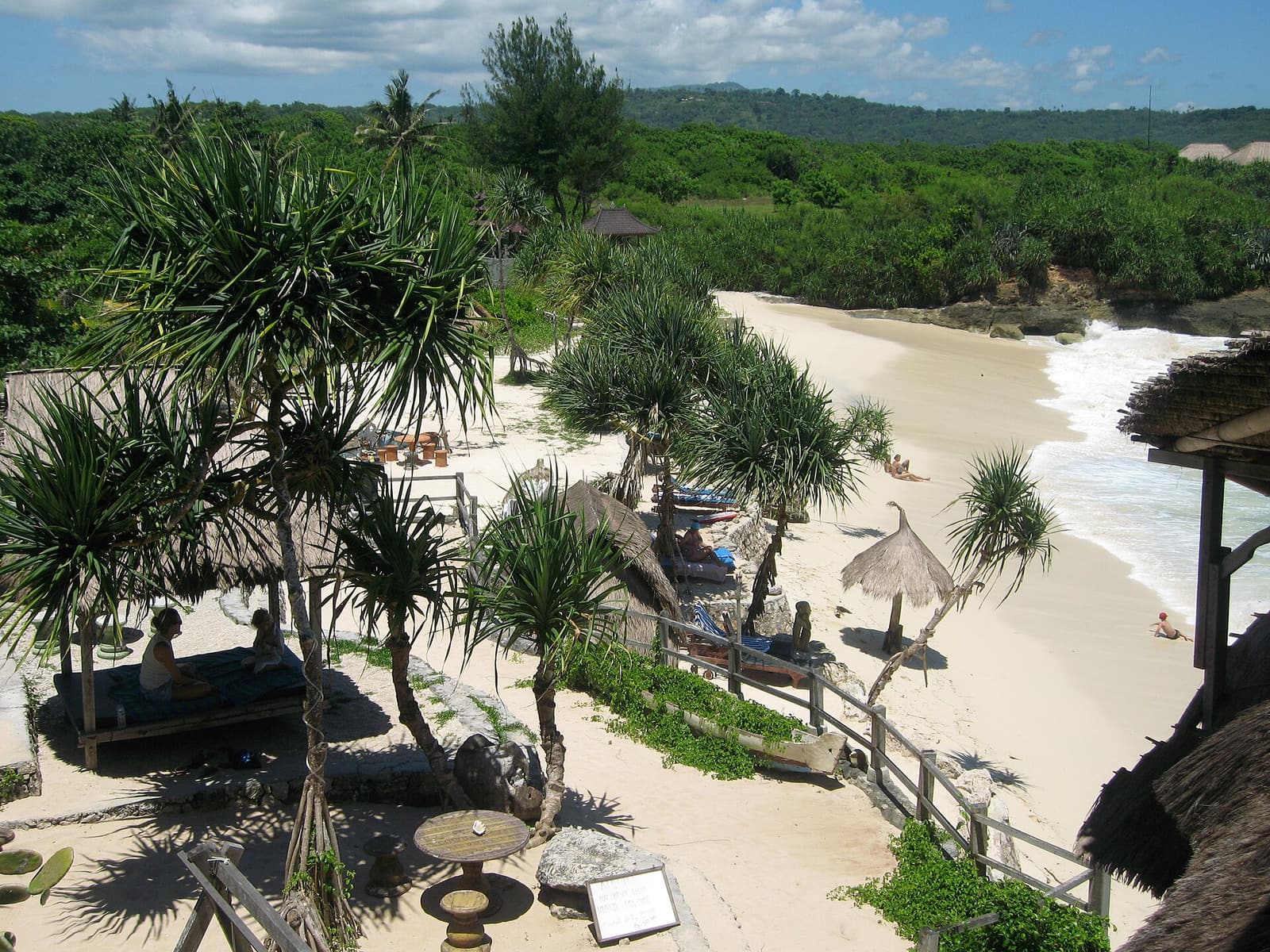
- Panorama Point, Yellow Bridge, Devil’s Tear and Dream Beach
- Priced per buggy — great value for up to four
 Island combo from €17
 From Lembongan: Snorkeling at 3 Spots, Mangrove and Land Tour
The best-value way to see all of Lembongan in one go. Choose the snorkel-only, mangrove or full combination option: reefs in the morning, a quiet glide through the mangroves and a drive round the island’s highlights.
- Three snorkel spots around Lembongan and Penida
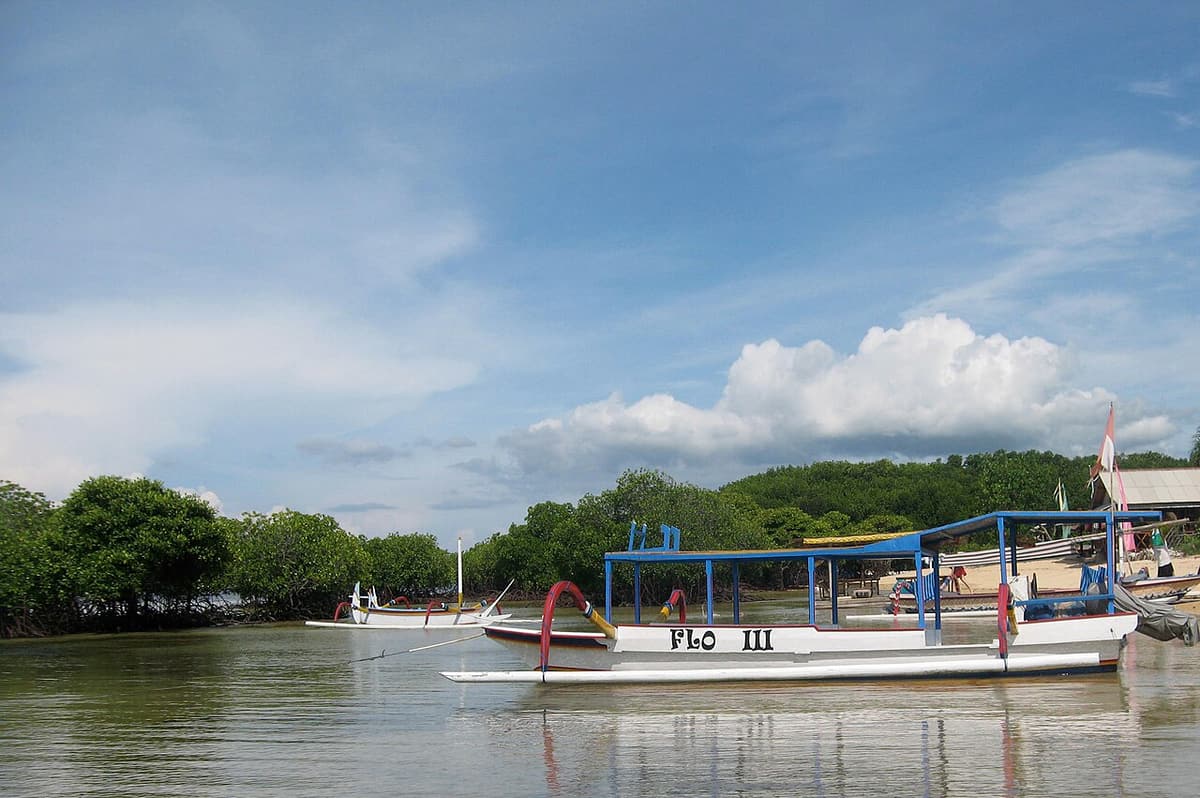
- A punted boat ride through the mangrove forest
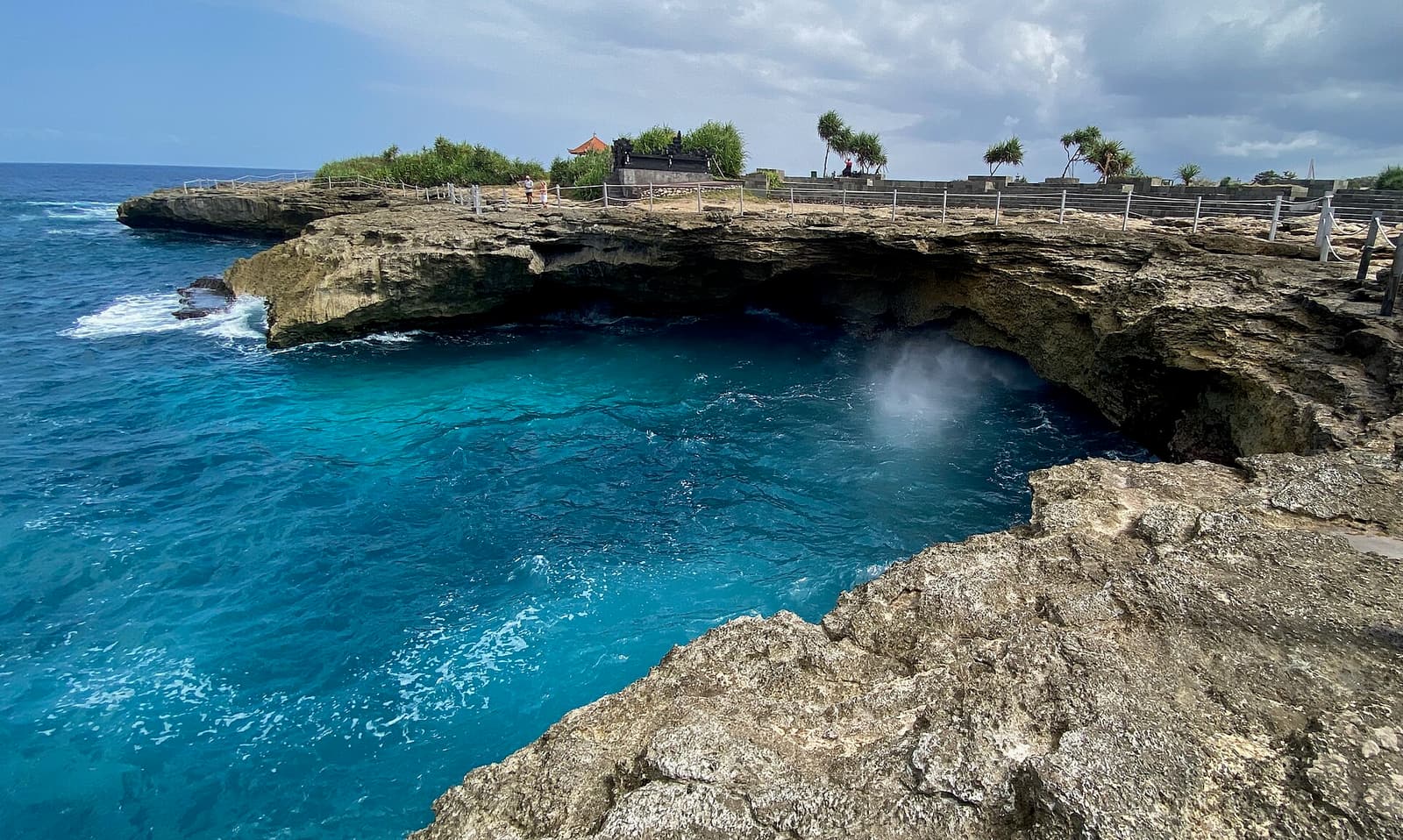
- Land tour of Devil’s Tear, the Yellow Bridge and viewpoints